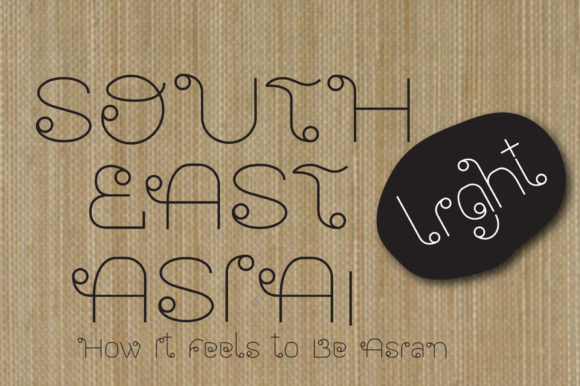
Southeast Asia Light Font: Elevate Your Creative Vision
There’s a particular challenge in design that many of us face: how do you inject personality and cultural depth into a project without sacrificing clarity or modern appeal? You want something with soul, something that tells a story, but it also needs to function seamlessly in a contemporary context. This is where the right typeface becomes more than just a tool—it becomes the voice of your project. For designers, marketers, and creators seeking an oriental-inspired aesthetic with exceptional versatility, the Southeast Asia Light Font presents a compelling solution. It’s a premium font designed to bridge the gap between traditional decorative art and clean, functional modern typography.
Aesthetic Grace: Understanding the Font's Visual Language
At its core, the Southeast Asia Light Font is a decorative font, but that label only scratches the surface. Its character comes from a subtle fusion of influences. You’ll notice soft, flowing curves that echo the elegance of script font styles, yet each letterform maintains a distinct, grounded structure. The "Light" in its name refers not just to its weight but to its overall feel—it’s airy, refined, and avoids the heaviness that can sometimes come with ornamental typefaces. The strokes have a gentle, brush-like quality, reminiscent of calligraphic traditions, but they are rendered with a precision that ensures legibility even at smaller sizes or on digital screens.
This isn't a font that shouts; it speaks with confident quietude. Its personality is versatile—it can feel serene and spiritual for wellness branding, sophisticated and worldly for luxury packaging, or playful and artistic for creative social media graphics. Unlike a purely handwritten font, which can feel casual, the Southeast Asia Light Font carries a polished professionalism. It’s this balance that makes it such a powerful creative font. It doesn’t just decorate text; it infuses it with a specific, evocative mood that can anchor an entire brand identity.
Where This Creative Font Truly Shines: Practical Applications
The real test of any design asset is its application. Where does the Southeast Asia Light Font find its home? The answer is surprisingly broad, thanks to its adaptable nature.
For Branding and Logo Design: A logo needs to be memorable and encapsulate a brand's essence. This font excels in creating logos for businesses in wellness, travel, hospitality, boutique retail, or artisanal food brands. It instantly communicates a sense of authenticity, craftsmanship, and global inspiration. Paired with a clean sans serif font for body text, it creates a beautiful hierarchy that is both striking and easy to read.
In Marketing and Digital Spaces: In the crowded landscape of social media graphics, standing out is key. Use this font for headlines on Instagram posts, Pinterest pins, or Facebook ads to grab attention with its unique flair. For web design, it’s perfect for hero section headings, landing page banners, or call-to-action buttons where you want to make an emotional impact. Its clarity ensures it remains functional even in these prominent roles.
Publishing and Editorial Design: Think beyond standard text. The Southeast Asia Light Font is a fantastic choice for magazine mastheads, book chapter titles, cookbook headers, or wedding invitation suites. In editorial design, it can add a thematic touch to feature articles about culture, cuisine, or travel. For self-publishers and authors, it offers a way to create a distinctive cover that stands out in a digital marketplace.
Packaging and Physical Products: On a shelf, packaging must communicate instantly. This font works beautifully for product names on cosmetic boxes, artisan tea labels, gourmet sauce bottles, or specialty craft kits. It conveys quality and a story before the customer even reads the description. Its elegance ensures it looks fantastic in print, whether embossed, foil-stamped, or simply printed in a complementary color.
Making It Work: Guidance for Selection and Use
Choosing a font is a strategic decision. Here’s how to approach integrating the Southeast Asia Light Font into your projects effectively.
Evaluate the Project Fit: First, consider your audience and message. Is your project aiming for elegance, tradition, or artistic expression? If yes, this font is likely a strong candidate. If you need a font for dense body copy or a highly technical document, its decorative nature might not be the best fit. It’s a display font at heart, meant for headlines and impactful text, not long paragraphs.
Master the Art of Font Pairing: The most professional designs use font pairings to create balance. The Southeast Asia Light Font pairs exceptionally well with neutral, clean typefaces. Try combining it with a geometric sans serif font like Montserrat or Lato for a modern, balanced look. For a more classic, editorial feel, a simple serif font like Georgia or Times New Roman can provide a sturdy foundation. Always test your pairings at the size they’ll be used to ensure the decorative details don’t clash with or overpower the supporting text.
Test for Readability and Hierarchy: Before finalizing, test the font in context. View it on different screens and in print proofs. Check its legibility against various background colors and textures. Use it to establish a clear visual hierarchy: let it command attention for main titles, while using your secondary font for subtitles and body text. This ensures your design is both beautiful and functional.
Review Licensing and Included Styles: When you acquire a commercial font like this, you’re investing in a professional tool. Always review the license to ensure it covers your intended use, whether for a client project, merchandise, or digital products. Check what styles are included—often, a font family will have multiple weights (Light, Regular, Bold) or alternate character sets (swashes, ligatures). These extras can greatly expand your creative options and help maintain consistency across all your materials.
In the end, the Southeast Asia Light Font is more than just a set of characters. It’s a versatile instrument for storytelling. By understanding its strengths and applying it thoughtfully, you can transform a standard design into something with genuine depth and appeal, connecting with your audience on a more resonant level. It’s a valuable addition to any designer’s toolkit, ready to bring a touch of inspired elegance to your next creative idea.