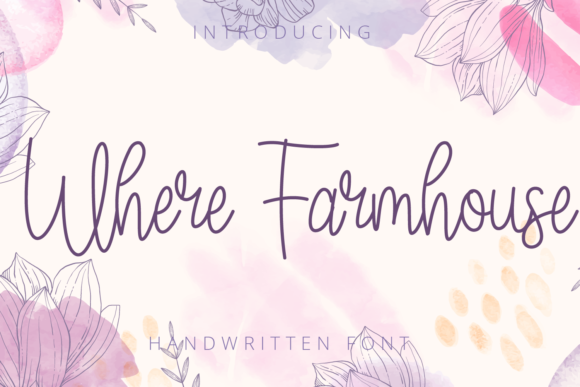
Where Farmhouse Font: Whimsy Meets Modern Design
The Visual Personality of Where Farmhouse
There's something immediately captivating about a script font that feels both personal and polished. Where Farmhouse Font strikes that balance beautifully. It's a whimsical script with flowing letterforms that carry a sense of warmth and authenticity, yet it maintains the clean, refined structure you'd expect from a premium font. The strokes have a natural, slightly varied weight that mimics the organic feel of handwritten lettering without sacrificing legibility.
What sets this typeface apart from countless other script fonts is its modern sensibility. While many handwritten fonts lean heavily into rustic or vintage territory, Where Farmhouse brings a contemporary freshness to the table. The letter connections feel intentional rather than overly casual. The spacing breathes. The overall rhythm of the text creates a visual flow that guides the eye naturally across any composition. It's the kind of typeface that makes people pause and look closer — not because it's trying too hard, but because it simply feels right.
Where This Font Truly Shines
Designers and creatives often ask where a font like Where Farmhouse actually works in practice. The honest answer is: in more places than you might initially expect. Its versatility is one of its greatest strengths.
Branding and Logo Design
For entrepreneurs building a brand identity, this font offers tremendous appeal. Think about businesses that want to communicate approachability, creativity, and a personal touch — bakeries, boutique shops, lifestyle brands, wellness studios, artisan goods, wedding planners. A logo design featuring Where Farmhouse immediately signals warmth and character. Paired with a clean sans serif font for body copy, it creates a visual hierarchy that feels both professional and inviting.
Invitations and Stationery
Wedding designs are perhaps the most natural fit. Save-the-dates, ceremony programs, menu cards, thank-you notes — Where Farmhouse brings an elegance that feels celebratory without being stuffy. The script has enough personality to stand alone on a simple card design, yet it complements decorative elements and illustrations without competing for attention. Stationery designers consistently reach for fonts like this because they photograph beautifully and reproduce well across both digital and print formats.
Digital and Social Media
Content creators and bloggers find Where Farmhouse particularly useful for social media graphics. Instagram quotes, Pinterest pins, YouTube thumbnails, and story overlays all benefit from a typeface that feels authentic and eye-catching at smaller sizes. The font reads well on screen, which isn't always the case with script fonts. Many handwritten fonts fall apart digitally — they become muddy, too thin, or illegible at typical social media dimensions. Where Farmhouse holds its character remarkably well across different screen resolutions.
Packaging and Editorial Design
Packaging design for small-batch products, artisan foods, cosmetics, and lifestyle goods often calls for typography that communicates craftsmanship. This font delivers that without looking like every other "handmade" aesthetic flooding the market. In editorial design, it works beautifully for pull quotes, chapter headings, and feature titles in magazines, lookbooks, and digital publications.
How Typography Choices Shape Perception
Every typeface carries psychological weight. The fonts you choose for your projects directly influence how audiences perceive your message, your professionalism, and your brand personality. This isn't abstract theory — it's practical reality that affects engagement, trust, and recognition.
When someone encounters Where Farmhouse Font on a product label or website header, they register specific associations: creativity, care, authenticity, modernity. Those associations happen in milliseconds, long before anyone reads a single word. This is why font selection matters so much in brand identity work. A premium font like this one communicates that you've invested thought into your visual presentation. It signals professionalism without corporate coldness.
Readability remains the non-negotiable foundation of good typography, though. Where Farmhouse works exceptionally well for headlines, short phrases, and display applications. For longer paragraphs or dense information, you'll want to pair it with a serif font or sans serif font that handles extended reading comfortably. Smart font pairing is what separates polished design from amateur attempts. Consider combining Where Farmhouse with something like a geometric sans serif for body text — the contrast creates visual interest while maintaining clarity.
Practical Guidance for Using Where Farmhouse
Before committing to any typeface for a project, run through a few practical checks.
Evaluate the project fit. Does your project call for warmth and personality, or does it need corporate neutrality? Where Farmhouse excels when you want to create emotional connection. It may not suit a law firm's annual report, but it's perfect for a lifestyle brand's product launch.
Test font pairings early. Don't design an entire layout before checking how your script font interacts with your supporting typefaces. Set a few sample combinations side by side. Look at contrast, x-height relationships, and overall visual weight. Where Farmhouse tends to pair well with both geometric sans serifs and clean, modern serif fonts.
Review the included styles. Quality script fonts often come with alternates, ligatures, and stylistic variations that expand your creative options significantly. Explore what's available before settling on default letterforms. Sometimes a simple alternate swash transforms a good layout into a great one.
Check the commercial licensing. This matters more than most people realize. If you're using the font for client work, merchandise, or products you intend to sell, verify that the license covers your intended use. Most premium font purchases include standard commercial licensing, but it's always worth confirming before a project goes to print or production.
Test at actual sizes. View your design at the size it will actually appear — on a business card, on a phone screen, on a product label, on a billboard. Fonts behave differently at different scales. What looks stunning at 72pt on your monitor might lose definition at 12pt on a printed card.
Making Creative Fonts Work for You
The best design assets are the ones that solve real problems and elevate real projects. Where Farmhouse Font belongs in that category. It's not just another decorative script — it's a versatile creative tool that serves designers, small business owners, crafters, and content creators across a wide range of applications.
The key is using it with intention. Understand its strengths. Know when it's the right choice and when something simpler might serve better. Pair it thoughtfully. Test it thoroughly. When you approach modern typography with that kind of care, the results speak for themselves — in stronger brand recognition, more engaging visual content, and a design language that genuinely connects with your audience.