Little Pat 1 Font: Your New Secret Weapon for Crisp Design
The Quiet Confidence of a Modern Sans Serif
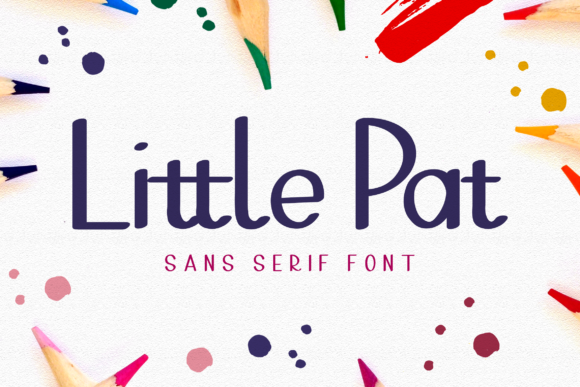
When you are deep in the creative trenches, whether you are building a brand identity for a new startup or designing a set of wedding invitations, the choice of typography can feel paralyzing. You need something that speaks clearly but doesn't scream for attention. Enter Little Pat 1 Font. At first glance, it might seem unassuming—just a collection of clean lines and geometric forms. But that simplicity is exactly where its power lies. It is a sans serif font that strips away the unnecessary ornamentation, leaving behind a typeface that feels fresh, approachable, and incredibly versatile.
I’ve seen a lot of fonts come and go, but the ones that stick around are the ones that solve problems. Little Pat 1 solves the problem of clutter. In a world saturated with noise, this font offers a moment of visual clarity. It doesn’t try to be the loudest voice in the room; instead, it acts as the reliable backbone of your layout. Its character shapes are distinct enough to be memorable, yet neutral enough to blend seamlessly into complex compositions. If you are tired of overused system fonts but find high-concept display fonts too limiting for body text, this premium font hits that sweet spot right in the middle.
Where Little Pat 1 Truly Shines
The adaptability of this typeface is what makes it a standout design asset. Because it is a simple and adaptable sans serif font, it fits into a surprisingly wide array of contexts without losing its character. Let’s break down the practical applications where I’ve found it to be most effective.
For packaging design, legibility is king. You need the customer to read the label from three feet away, or while scrolling rapidly on a mobile screen. Little Pat 1 excels here because its x-height is generous, and the letter spacing is balanced. It makes product information feel accessible rather than clinical. I recently used a similar style for a line of organic skincare, and the clean geometry of the font helped convey a sense of hygiene and modernity without using sterile corporate blue.
In the realm of web design and digital interfaces, performance and readability are non-negotiable. This font renders beautifully on screens of all resolutions. It doesn't get muddy on mobile devices, and it maintains its structure at smaller sizes, which is crucial for UI elements like buttons and navigation bars. If you are a blogger or publisher, using Little Pat 1 for your body copy can reduce eye strain for your readers, keeping them on the page longer. It pairs wonderfully with a serif font for headings, creating a classic editorial look that feels professional.
But don't limit it to the screen. This is a creative font that loves print. Think about social media graphics, posters, and flyers. Because it is a modern typography choice, it grounds vibrant colors and busy photography. If you are an entrepreneur creating your own business cards or labels, this font ensures that your contact details are actually readable. It brings a level of professionalism that generic fonts often lack, signaling to your clients that you pay attention to the details.
Strategic Application: Hierarchy and Pairing
Using a font effectively isn't just about picking a style you like; it's about creating a system. Little Pat 1 is an excellent team player in font pairing. Its neutrality allows it to step back when you need a headline to pop. Try pairing it with a bold script font for a feminine, boutique aesthetic, or alongside a heavy slab serif for something more industrial and grounded. The contrast creates visual interest and helps guide the reader’s eye through your content.
However, Little Pat 1 is strong enough to stand on its own, too. You can create a complete hierarchy using just this single typeface by manipulating weight, size, and color. This approach creates a very cohesive and unified brand identity. When a brand uses one font family consistently across all touchpoints—from the website to the logo design to the email newsletters—it builds recognition. Consistency breeds trust, and Little Pat 1 provides the perfect medium for that consistency.
One area where I see many crafters and small business owners struggle is with the "personality" of their text. They want their brand to feel warm and human, but they don't want the sloppiness that sometimes comes with handwritten fonts. Little Pat 1 bridges that gap. It has a friendly, geometric warmth that feels human-made but polished. It’s the kind of commercial font that says, "We are serious about our work, but we are easy to talk to."
Practical Tips for Implementation
If you are considering adding this to your toolkit, here is how to get the most out of it. First, look at the included styles. A good premium font usually comes with various weights. Test the Light or Regular weights for body text to ensure readability in long paragraphs, and use the Bold or Black weights for impact.
Second, pay attention to kerning and tracking. Even the best sans serif font can look awkward if the spacing is too tight or too loose. Little Pat 1 is designed with standard spacing that works for most situations, but for large headlines, you might want to tighten the tracking slightly for a more polished, high-end look. For smaller body text, a little extra breathing room can work wonders.
Finally, respect the licensing. As a commercial font, ensure you have the correct license for your specific use case—whether that is for a single client project or a mass-produced merchandise line. Understanding the rights associated with your design assets is a mark of a true professional.
Ultimately, Little Pat 1 Font is about elevating your ideas. It provides the structural foundation so your creativity can flourish. Whether you are designing a minimalist portfolio site or a colorful party invitation, this typeface adapts to your vision. Give it a try in your next project, and you might be surprised at how much a simple, well-designed sans serif can transform your work.